
- Artists
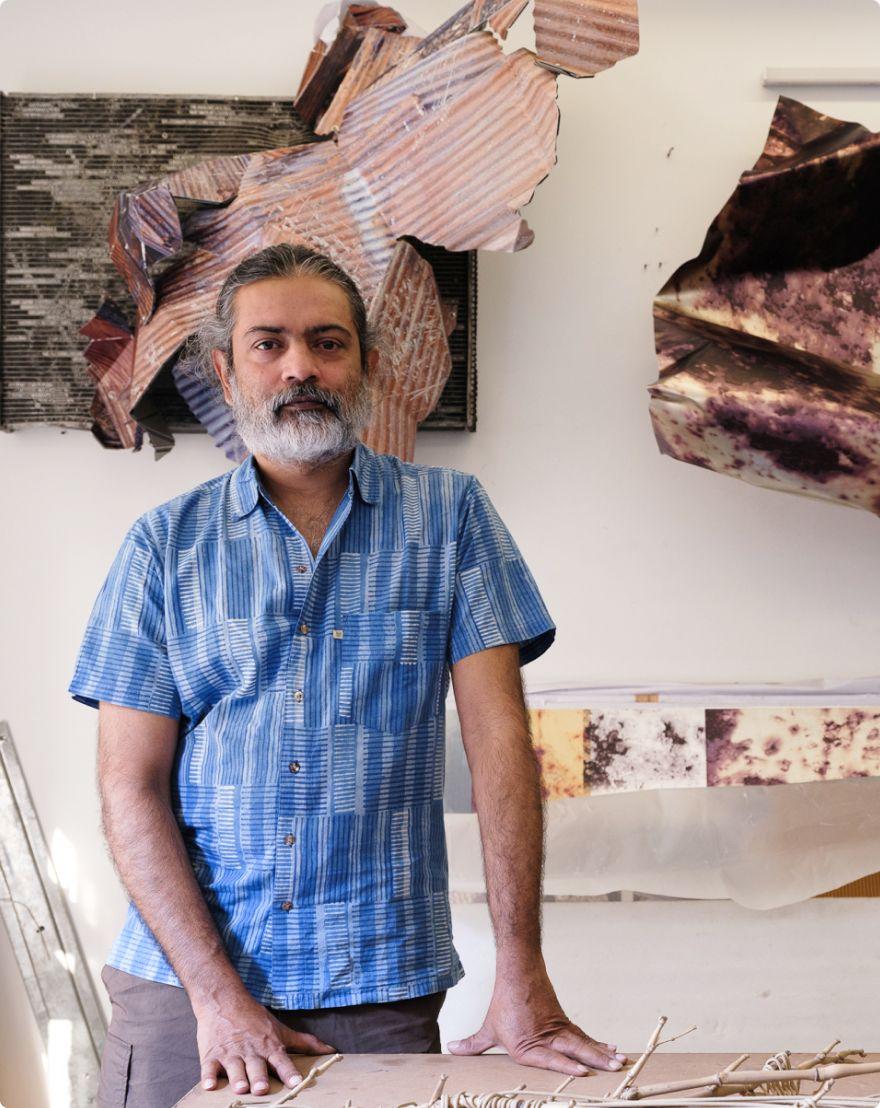
- Asim Waqif
Asim Waqif
Born
1978, Hyderabad, Telangana
Based in
New Delhi
Practice & Materials
Installations using bamboo and reclaimed materials
Key Themes
Waste, resource use, and ecological imbalance
Asim Waqif employs natural and recycled materials, including bamboo, timber, scrap metal, and plastic, in monumental installations that reflect on waste, resource use and ecological imbalance in today’s world. Combining manual labor with experimental construction, his structures are frequently temporary and interactive, oscillating between the realms of art, architecture, design, and ecology, with a particular focus on the urban environment.
Featured work
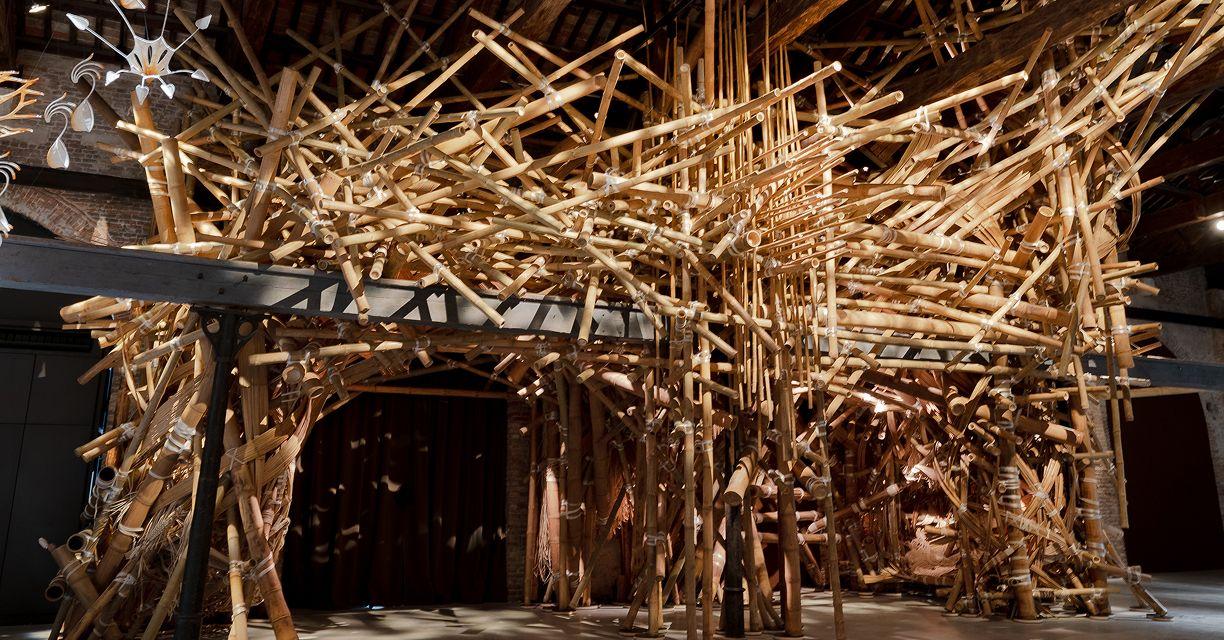
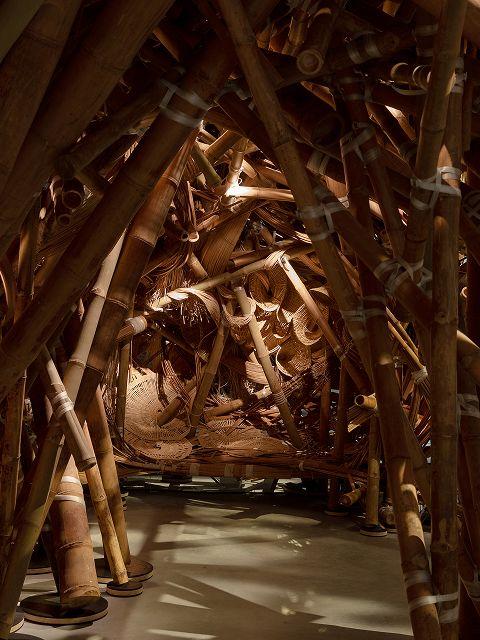
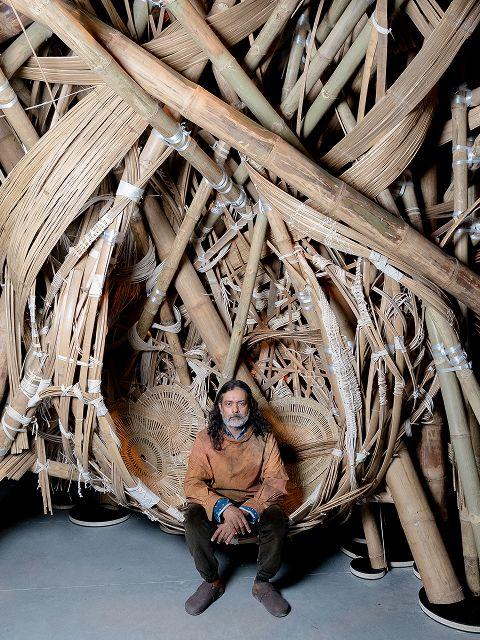
Chaal, 2026
Bamboo, cane, reed weaving, and various lashings
This monumental scaffolding-inspired installation occupies a central position in the Pavilion, reflecting on the ubiquitous construction sites of Indian cities. Within the Pavilion, the resilient and invasive bamboo overwhelms in scale and durability the adjacent thread house and aerial garden. Once typical of Indian construction, the bamboo scaffolding invites visitors to reflect on how, all around us, new buildings supersede old ones. Scaffolding - and what lies behind it - reveals how home is in a perpetual state of becoming - provisional, and always under construction.
Note from
Asim Waqif
“I have been working with bamboo on and off for almost 30 years. At first it was a cheap and versatile material to play with when I was an architecture student. I have worked from plantation and harvesting to artisanal craft and architecture, and this project is informed by all these cumulative experiences. Within set boundaries determined by artistic, curatorial, and spacial considerations, I want to create a bubble of artisanal collaboration and exploration.
Scaffolding regulations have changed over time to favor industrially produced materials like steel and aluminium. Construction rules in India now bar the use of bamboo for scaffolding and formwork. Earlier most rural houses employed materials that were locally available and sustainable. The Rural Housing Scheme provides grants only for brick and cement construction (pakka) with tin roofs. This has been detrimental to the unique vernacular architecture that was flourishing in rural India.
By removing an art intervention after some time, the viewer is allowed to remember the artwork and its experience. I think this memory has much more potential than the art object itself.”
from the Pavilion
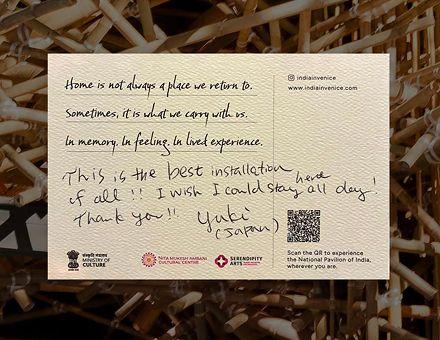
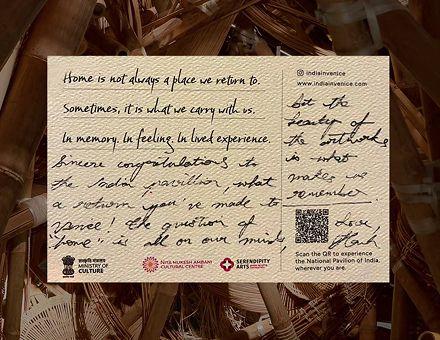


Learn more about the curator’s perspective and the artist’s reflections

Artist biography
Education
- Bachelor’s degree in Architecture, School of Planning and Architecture, New Delhi, 2000
Solo & Group Exhibitions
- Mattress Factory Museum of Contemporary Art, Pittsburgh
- Dr. Bhau Daji Lad Museum, Mumbai
- Kiran Nadar Museum of Art, New Delhi
- Queens Museum, New York
- Museum of Fine Arts, Boston
Biennales & International Events
- 2nd Islamic Arts Biennale
- 5th Kochi-Muziris Biennale
- Colomboscope 2017
- 5th Marrakech Biennale
Academic Engagements
